
How to Choose a Slow Feeder Bowl for Small Dogs
Small dogs can be enthusiastic eaters. Some finish a meal in seconds, push their food around the bowl, or swallow kibble before they have had time to chew. If that sounds familiar, a slow feeder bowl for small dogs may make mealtime more thoughtful and manageable. The right bowl does not need to be complicated. It needs to fit your dog’s size, eating style, daily portion, and your cleaning routine.
Choosing well means looking beyond a cute shape or a promise of slower eating. A bowl that is too deep may frustrate a short-nosed or tiny dog. A puzzle that is too difficult may turn dinner into a source of stress. A poorly sized dish may be hard to clean or easy to tip over. This guide explains the practical details to consider so you can select a slow feeder that supports a calmer everyday feeding routine while keeping your dog’s comfort and safety in view.
Why a Slower Mealtime Can Matter for Small Dogs
Fast eating is not automatically a health problem, and a slow feeder is not a medical treatment. However, some dogs gulp meals so quickly that their owners notice coughing, repeated swallowing, food scattering, or discomfort after eating. A textured bowl can encourage a dog to take smaller mouthfuls and pause between bites. For many households, that creates a more deliberate feeding experience and gives the owner a useful way to add simple enrichment to an ordinary meal.
Small dogs often have smaller mouths and shorter snouts than medium or large breeds, so the same bowl design will not work equally well for every dog. A channel that seems easy for a bigger dog may be too narrow for a toy breed. On the other hand, a wide, shallow dish with gentle ridges may provide enough challenge without forcing a small dog to work around tall walls. Fit matters more than the number of ridges or the novelty of the pattern.
How a Slow Feeder Bowl Works
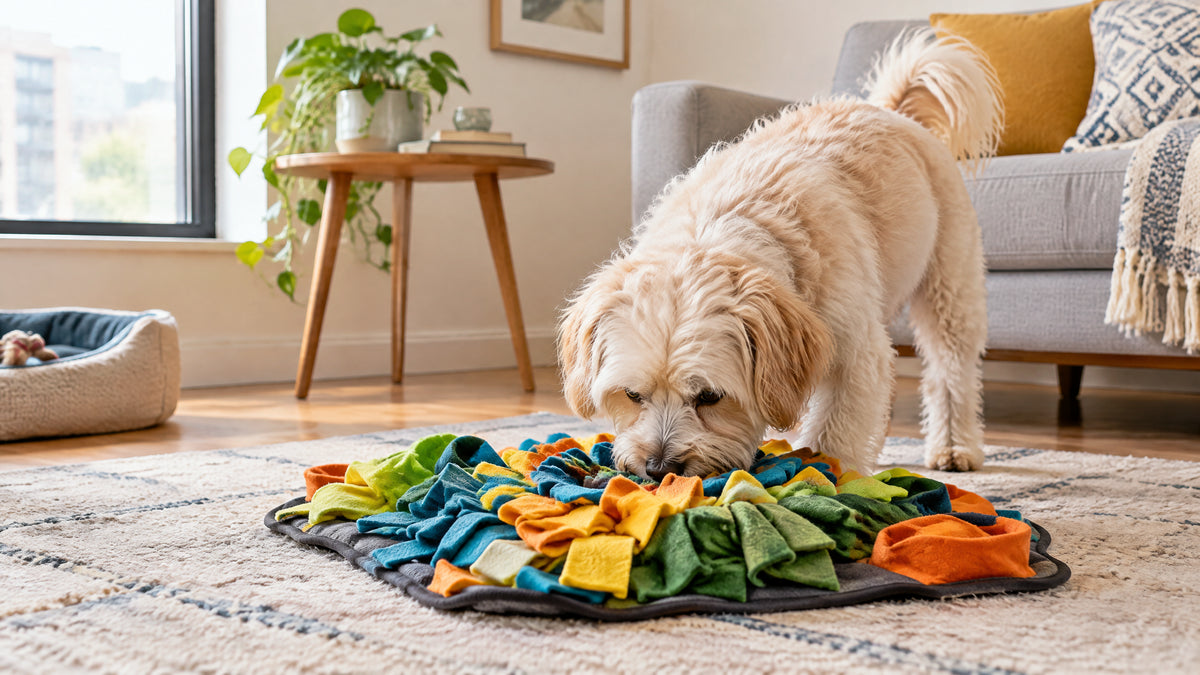
A standard bowl lets food collect in one accessible pile. A slow feeder changes that pattern with raised sections, grooves, channels, or pockets. The dog has to move its nose and tongue around the structure to reach the food. That extra effort can naturally extend the meal and make eating more interactive.
The goal is not to make food unreachable. A well-designed bowl creates manageable pauses while allowing the dog to succeed. Your dog should be able to access the food without repeatedly biting the bowl, scraping its face against sharp edges, or becoming visibly upset. Some dogs prefer broad, simple ridges, while others enjoy a more varied maze. Start with the least complicated design that addresses the eating behavior you have observed.
Slow feeders can be used with dry kibble, and some are suitable for wet food if the manufacturer’s care instructions allow it. Wet food may settle into narrow grooves and require more thorough washing. Treats or a small amount of food can also be used for supervised enrichment, but the calories should be included in the dog’s overall daily intake. A bowl should make feeding more engaging, not encourage accidental overfeeding.
How to Choose a Slow Feeder Bowl for Small Dogs
Start With the Bowl’s Size and Usable Space
The most important question is whether your dog can comfortably reach the food. Look for a bowl that is proportionate to your dog’s muzzle, head, and usual meal portion. The outer diameter is only part of the measurement. Pay attention to the usable eating area, the width of the channels, and the height of the raised sections.
For many small dogs, a shallow or low-profile design is easier to use than a deep maze. A dog with a short muzzle may struggle if the food falls between tall, closely spaced barriers. A tiny dog may also need a smaller portion of food spread across the surface so the bowl does not become unnecessarily crowded. The best slow feeder bowl for small dogs gives your pet room to eat naturally rather than requiring awkward head or neck positions.
Measure your current bowl and compare it with the product dimensions before buying. Consider how much food your dog receives at each meal, not only the dog’s weight. If the surface is completely covered by kibble, the design may be too small for the portion. If food disappears into deep corners, the bowl may be too challenging for everyday use.
Match the Design to Your Dog’s Eating Style
Slow feeder patterns vary from simple raised spirals to complex multi-channel mazes. A dog that eats quickly from an open bowl may respond well to moderate ridges that divide the meal into smaller areas. A dog that already shows hesitation around new objects may do better with a simple pattern and plenty of visible food. Complexity is not a quality score. It is a setting that should match your dog.
Watch what happens during the first few meals. If your dog moves steadily, reaches the food without excessive effort, and finishes comfortably, the design may be a good fit. If your dog paws at the bowl, flips it, gives up, or repeatedly strikes the sides with its teeth, the pattern may be too difficult or the bowl may be unstable. You can often make the experience easier by using a less challenging design, adding food gradually, or mixing a small amount of familiar food across the surface.
A good slow feeder is interactive without becoming frustrating. For small dogs, gentle curves and wider channels are often easier to manage than narrow gaps. The correct choice depends on the individual dog, so behavior at mealtime is more informative than marketing language on a product page.
Choose a Safe, Comfortable Material
Materials affect comfort, durability, odour retention, and cleaning. Common options include food-contact plastics, silicone, stainless steel, and combinations of these materials. Whichever option you consider, inspect the product information and follow the supplier’s instructions for food use, temperature, and cleaning.
The surface should be smooth enough to clean thoroughly, with no exposed sharp edges, loose parts, or rough seams that could irritate your dog’s mouth. If your dog likes to chew, avoid treating the bowl as a chew toy and monitor for damage. Replace it if it becomes cracked, deeply scratched, or difficult to clean. Dogs can use products differently, and supervision helps you notice wear before it becomes a bigger concern.
Some lightweight bowls are convenient but easy for a small dog to push across the floor. A non-slip base, stable shape, or feeding mat can make the routine calmer. Stability is especially useful on hard floors, where a bowl may slide while the dog is trying to work around the ridges. A bowl does not have to be heavy to be practical, but it should remain steady enough for your pet to eat comfortably.
Consider Cleaning Before You Buy
A slow feeder may have more contact surfaces than a regular bowl, so cleaning convenience matters. Food can collect around the base of ridges and in corners that are easy to miss. Before choosing a design, look at whether you can reach every channel with a normal brush or sponge. If the bowl is difficult to rinse, it may not suit a household with a busy schedule.
Check whether the bowl is dishwasher-safe only if the manufacturer explicitly says so, and follow the recommended temperature and placement instructions. If you wash by hand, rinse away food residue promptly and allow the bowl to dry fully. Wet food generally calls for more immediate cleaning than dry kibble because residue can cling to textured surfaces.
How to Introduce a Slow Feeder Bowl
A gradual introduction can help your dog understand the new bowl without turning mealtime into a battle. Begin with a small amount of familiar food in the easiest part of the design. Keep the bowl on a stable surface and stay nearby while your dog investigates. There is no need to make the first meal a challenge.
If your dog eats comfortably, use the bowl for the next meal or add a little more food across the surface. Maintain a normal feeding schedule and observe body language. A curious dog may sniff and explore before eating. A worried dog may avoid the bowl, stare at it, or show other signs of discomfort. If that happens, return to a regular bowl temporarily or make the slow feeder easier, then try again later.
Supervision is particularly important during the first uses and for any dog that chews household objects. Never force a dog to continue with a feeder that appears to cause distress. The purpose is to support a comfortable routine, not to test how difficult a puzzle your pet can solve.
Common Mistakes to Avoid
One common mistake is choosing a bowl based only on the phrase “slow feeder” without checking the measurements. A product can be advertised for small dogs while still having channels that are too narrow, walls that are too high, or a surface that cannot hold a normal meal. Compare the dimensions with your dog and the food portion before purchase.
Another mistake is assuming that slower is always better. If a dog cannot reach its food without excessive effort, the feeder may become frustrating. A meal that takes longer is not automatically a better meal. Look for steady access, comfortable posture, and a design your dog can learn to use.
Finally, do not overlook changes in eating behavior. A slow feeder may be useful for a dog that has always eaten enthusiastically, but a sudden change in appetite, chewing, swallowing, coughing, vomiting, or comfort deserves attention. Contact a veterinarian when you are concerned about a persistent or unusual feeding issue. A feeder should not be used to mask a possible health problem.
When a Different Feeding Option May Be Better
Not every dog needs a slow feeder, and not every small dog enjoys one. Some pets eat at a comfortable pace from a regular bowl. Others may prefer food spread on a shallow surface or divided into smaller meals according to guidance from their owner and veterinarian. A slow feeder is one practical tool among several, not a requirement for responsible feeding.
Dogs with particular facial structures, dental concerns, mobility limitations, or a history of frustration around food may need a more personalised approach. Ask a qualified veterinary professional for advice if you are unsure whether a textured feeder is suitable. Use any product according to its instructions, and pay attention to your dog rather than assuming that a popular design will work for every pet.
A Practical Buying Decision for Everyday Use
When comparing options, imagine the entire routine rather than looking at the pattern alone. Can your dog reach the food comfortably? Will the bowl hold the normal portion without overflowing? Will it stay in place on your floor? Can you clean every channel thoroughly? Does the material and construction suit the way your dog interacts with objects? These questions usually lead to a more useful choice than selecting the most elaborate design.
For a first slow feeder, a stable, easy-to-clean bowl with moderate ridges is often a sensible starting point for a small dog. You can observe how your pet responds before considering a more advanced maze. If your dog does well, keep the experience consistent and continue checking the bowl for wear. If the design is too easy or too difficult, adjust gradually instead of changing everything at once.
Final Thoughts
The right slow feeder bowl for small dogs should make mealtime more deliberate without making it stressful. Focus on proportion, comfortable access, a manageable pattern, safe construction, stability, and cleaning. Introduce the bowl gradually, supervise early use, and reassess if your dog seems frustrated or if eating behavior changes unexpectedly.
A thoughtful feeder can be a simple addition to a pet-care routine for small dogs that rush through meals. Explore the feeding and enrichment products at Monsef Pet Care to find practical options for your dog’s everyday needs, and choose the design that best fits your pet’s size, habits, and comfort.

Leave a comment
This site is protected by hCaptcha and the hCaptcha Privacy Policy and Terms of Service apply.