Best Snuffle Mat for Dogs in Small Apartments
Living with a dog in a small apartment can be rewarding, but limited space does not always make it easy to provide enough daily enrichment. A dog may receive regular walks and still need more opportunities to sniff, explore, and work for food. Without appropriate outlets, boredom can appear as barking, chewing, restless behavior, or constant demands for attention.
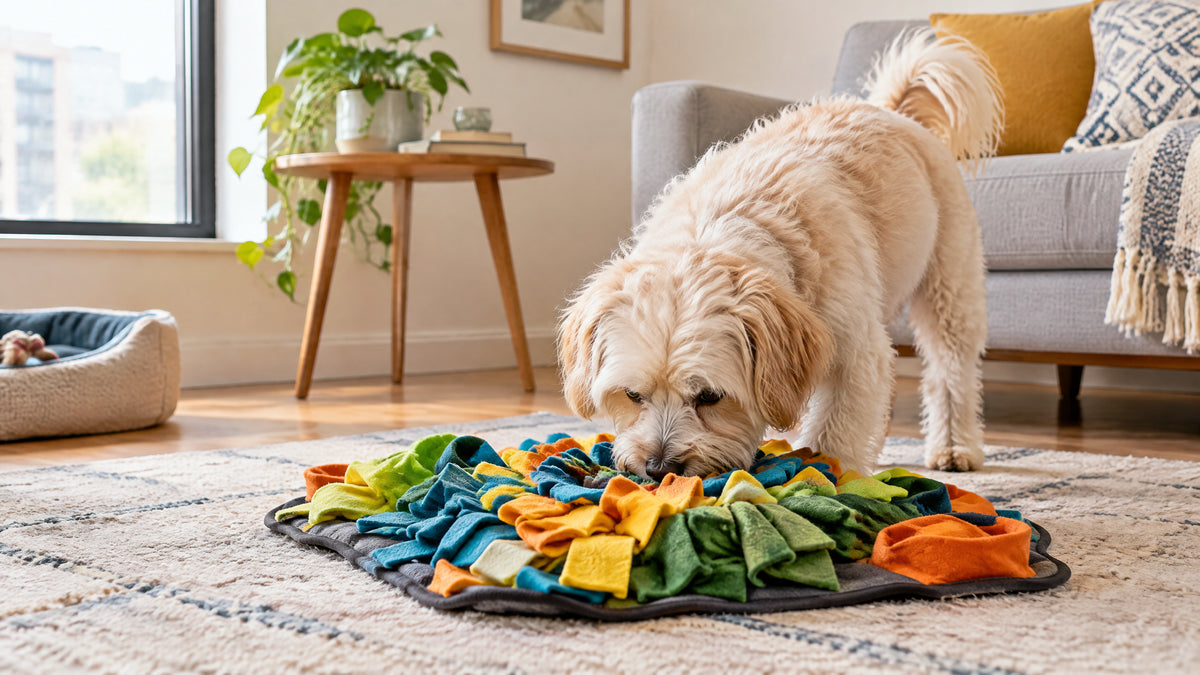
A snuffle mat can help turn an ordinary meal or treat session into a compact indoor activity. Instead of placing food in a bowl and having it disappear within seconds, you can hide small portions among the mat’s fabric sections and encourage your dog to search with their nose. The activity takes up little floor space, does not require batteries, and can fit into many apartment routines.
The best snuffle mat for dogs in small apartments is not necessarily the largest or most complicated option. It should be compact enough to store easily, stable enough to use safely, simple to clean, and challenging without becoming frustrating. Choosing the right design can help you create a more engaging home environment while keeping your dog’s routine practical and manageable.
Why Snuffle Mats Work Well in Small Apartments
Dogs experience the world through their noses. Sniffing is a natural behavior that provides information, encourages exploration, and can make a familiar environment more interesting. A snuffle mat gives your dog a structured place to use this instinct indoors, which is especially useful when bad weather, work schedules, or apartment restrictions limit outdoor activities.
The main advantage is that a snuffle mat offers enrichment without requiring a large play area. Your dog can search for pieces of kibble or small treats on a mat placed on a kitchen floor, living room rug, or another easy-to-clean surface. Once the session is over, the mat can usually be folded, rolled, or stored in a cabinet, depending on its design.
Snuffle mats can also make meals feel more engaging. Dogs that eat quickly may benefit from having to locate individual pieces instead of consuming everything from an open bowl at once. However, a snuffle mat should not be presented as a medical treatment or a guaranteed solution for fast eating, anxiety, or weight management. It is an enrichment tool that can support a more interactive routine when used appropriately.
For apartment dwellers, another benefit is the possibility of quiet mental activity. A dog searching through fabric can be less disruptive than running, jumping, or playing with loud toys. It will not eliminate every source of noise or energy, but it can add variety to the day without requiring more furniture or a large backyard.
What Makes the Best Snuffle Mat for Dogs in Small Apartments?
Several details matter when space is limited. The ideal mat should fit your dog, your home, and your cleaning routine. Before choosing one, consider not only the appearance but also how it will be used, washed, stored, and supervised.
Compact Size and Easy Storage
A small apartment benefits from products that do not take over the room. Look for a snuffle mat that offers enough surface area for your dog to search comfortably but can be folded or rolled after use. A mat that remains permanently spread across the floor may become a tripping hazard or collect dust between sessions.
The correct size depends on your dog’s body size, snout, and feeding habits. A very small mat may be suitable for a small dog eating a modest portion, while a larger dog may need more space to search without stepping heavily on the food areas. The goal is not to cover as much floor as possible. The goal is to create a useful search activity that fits naturally into your home.
Storage is also important for maintaining the mat. A dedicated shelf, drawer, or washable storage container can help keep it away from moisture, other pets, and household dirt. Avoid storing the mat while it is damp, because trapped moisture can create unpleasant odors and hygiene problems.
Stable Construction
A snuffle mat should remain reasonably stable while your dog searches. If the entire mat slides across a smooth floor, your dog may become frustrated or pull at the fabric. A non-slip backing, heavier base, or placement on a secure rug can improve the experience, although no backing makes a product completely slip-proof in every home.
Stability is particularly important for enthusiastic dogs. A dog that digs aggressively, paws at the fabric, or pushes the mat with its nose may move a lightweight product more easily. If your dog is energetic, choose a design with reinforced stitching and a base that stays in place during normal use. You can also start the activity on a surface that gives the mat more grip.
Do not assume that a product is safe simply because it looks sturdy in a product photo. Inspect the mat when it arrives. Check for loose threads, detachable pieces, sharp edges, strong chemical odors, or weak seams. A product should be removed if your dog begins tearing it apart or attempting to swallow parts of it.
Safe and Practical Materials
The mat’s material should be comfortable for your dog’s nose and easy for you to maintain. Fabric strips are common because they create pockets where kibble and treats can hide. The material should be securely attached and free from loose pieces that could be pulled off during supervised use.
If the product will contact food, ask the supplier for accurate information about the materials and cleaning instructions. Avoid repeating claims such as food-safe, non-toxic, or antibacterial unless they are supported by reliable documentation for the specific product. A responsible product description should explain what the mat is designed to do without overstating its safety or performance.
Washability is especially valuable in an apartment. Food particles can remain trapped between fabric layers, and a mat that cannot be cleaned properly may become unpleasant over time. Check whether the supplier recommends machine washing, hand washing, or spot cleaning. Follow those instructions and allow the mat to dry fully before storing it.
A Suitable Level of Difficulty
The best snuffle mat is challenging enough to encourage searching but not so difficult that your dog gives up. A beginner may need large, visible food pieces placed loosely across the top of the mat. More experienced dogs may enjoy deeper fabric sections or food hidden in several areas.
Difficulty should be adjusted gradually. If the food is hidden too deeply at the beginning, your dog may chew, paw, or shake the mat instead of sniffing. If every piece is immediately visible, the activity may end too quickly. Observe your dog and adjust the amount of food, the placement, and the session length based on their behavior.
A colorful or three-dimensional design may look attractive, but visual appearance is less important than usability. Dogs rely primarily on scent during this activity. A visually complex mat is not automatically a better choice if it is difficult to clean, unstable, or made with poorly secured fabric.
How to Choose a Snuffle Mat for Your Dog
Your dog’s size and personality should influence your decision. A small breed with a short nose may need shallow, accessible fabric sections. A larger dog may need a wider mat with enough room for its paws and muzzle. Dogs with long hair may require more frequent cleaning because fur can become mixed with food particles.
Consider your dog’s searching style as well. Some dogs investigate calmly and use their noses carefully. Others push, paw, bite, or pull at anything that contains food. For the second group, select a sturdier design and provide close supervision. A snuffle mat is not an indestructible toy, and it should not be left with a dog that tries to consume the fabric.
Age and physical comfort also matter. Puppies may need short, easy sessions that build confidence. Older dogs may appreciate a comfortable activity that does not require running or jumping, but you should still place the mat on a surface that is easy for them to access. If your dog has mobility concerns, ask a veterinarian whether the activity and setup are appropriate.
How to Introduce a Snuffle Mat in an Apartment
Start in a quiet area with minimal distractions. Place a small amount of familiar kibble on top of the mat where your dog can see and smell it. Let your dog investigate without forcing its nose into the fabric. Praise calm exploration and allow the dog to discover the activity at its own pace.
Once your dog understands that food can be found on the mat, begin hiding a few pieces among the easier sections. Keep the first sessions short and positive. A dog that walks away may be tired, distracted, or unsure of the new object. You can try again later rather than making the activity feel like a challenge it must complete.
Over time, place food in different sections and vary the location of the mat within the apartment. Do not hide every piece deeply. Leaving some food accessible helps your dog maintain confidence while encouraging more careful searching. The objective is an enjoyable enrichment routine, not a competition.
Use part of your dog’s normal food allowance when appropriate, especially if treats are also being used during the day. This can help avoid adding unnecessary calories. Food should be placed in a clean, dry mat, and the activity should be supervised from beginning to end.
Common Snuffle Mat Mistakes to Avoid
One common mistake is choosing a mat based only on its appearance. Bright colors and unusual shapes may attract attention in an online store, but they do not guarantee durability, stability, or easy cleaning. Read the product information carefully and request details from the supplier when important specifications are unclear.
Another mistake is hiding food too deeply on the first attempt. A dog that cannot find anything may become frustrated and start chewing the mat. Make the activity easy at first, then increase the challenge gradually. The best snuffle mat for dogs in small apartments should make enrichment convenient, not create a new source of stress.
Leaving the mat unattended is also risky. Some dogs treat fabric products as chew toys once the food is gone. Supervision allows you to remove the mat when the search session ends and notice signs of damage before they become a problem.
Finally, avoid using a dirty or damp mat. Food residue, saliva, and household dust can build up between the fabric strips. Regular cleaning and complete drying are simple habits that support a more hygienic enrichment routine.
Cleaning and Storing a Snuffle Mat
Cleaning frequency depends on how often the mat is used and what food is placed inside it. Dry kibble generally leaves less residue than moist food, soft treats, or spreadable foods. Even when the mat looks clean, shake it out after each session and inspect the deeper sections for crumbs.
Follow the supplier’s care instructions instead of assuming every mat can go into a washing machine. If machine washing is allowed, use the recommended cycle and let the mat dry thoroughly. If only hand washing is advised, clean it gently and avoid harsh products that may leave strong odors or residues.
Store the mat in a dry location away from direct moisture. Folding it while wet can trap odor and encourage deterioration. If the mat develops a persistent smell, visible mold, damaged seams, or loose pieces, discontinue use and replace it.
Is a Snuffle Mat Right for Every Dog?
A snuffle mat can be useful for many dogs, but it is not the right fit for every animal or every situation. Dogs that aggressively shred fabric, swallow non-food items, or become possessive around food require a more cautious approach. A veterinarian or qualified behavior professional can help you choose suitable enrichment options when there are safety or behavior concerns.
The activity should also complement, rather than replace, daily care. Dogs still need appropriate exercise, social interaction, rest, training, and access to fresh water. A snuffle mat is one small part of a balanced routine. It can make indoor time more interesting, but it cannot meet every physical or emotional need on its own.
Final Thoughts on Choosing the Best Snuffle Mat
The best snuffle mat for dogs in small apartments is compact, stable, washable, and suitable for your dog’s size and searching style. It should fit your available space without making storage difficult, and it should be durable enough for supervised use. Most importantly, it should encourage natural sniffing in a calm and positive way.
Start with an easy setup, observe how your dog interacts with the mat, and increase the challenge only when the activity remains enjoyable. Inspect the product regularly, clean it according to the supplier’s instructions, and remove it if damage appears. With the right expectations and routine, a snuffle mat can be a simple way to add enrichment to apartment life.
At Monsef Pet Care, you can explore practical products designed to make everyday life with your companion more comfortable and engaging. Choose enrichment items that fit your dog, your home, and the way you enjoy spending time together.

Leave a comment
This site is protected by hCaptcha and the hCaptcha Privacy Policy and Terms of Service apply.